When a finding has to stand up to an adjuster, an opposing expert or a court, credentials and documentation matter as much as the observation.
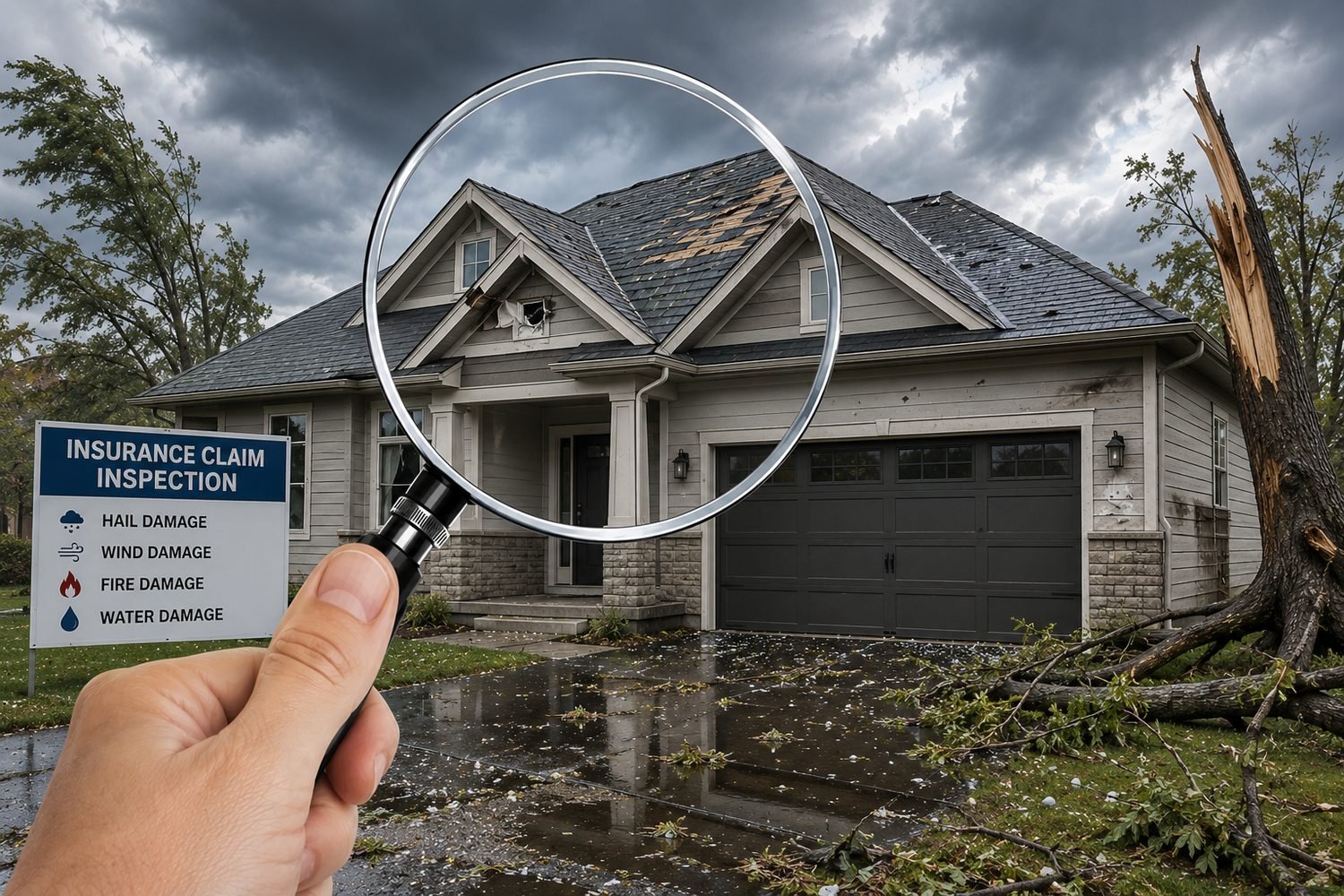
Hail, wind, fire, water and storm damage inspected and documented independently of the insurer and independently of the contractor bidding the repair.
The report separates storm damage from pre-existing wear and from installation defects, because that distinction is usually the whole argument. Findings are photographed, located and described in terms an adjuster can act on.
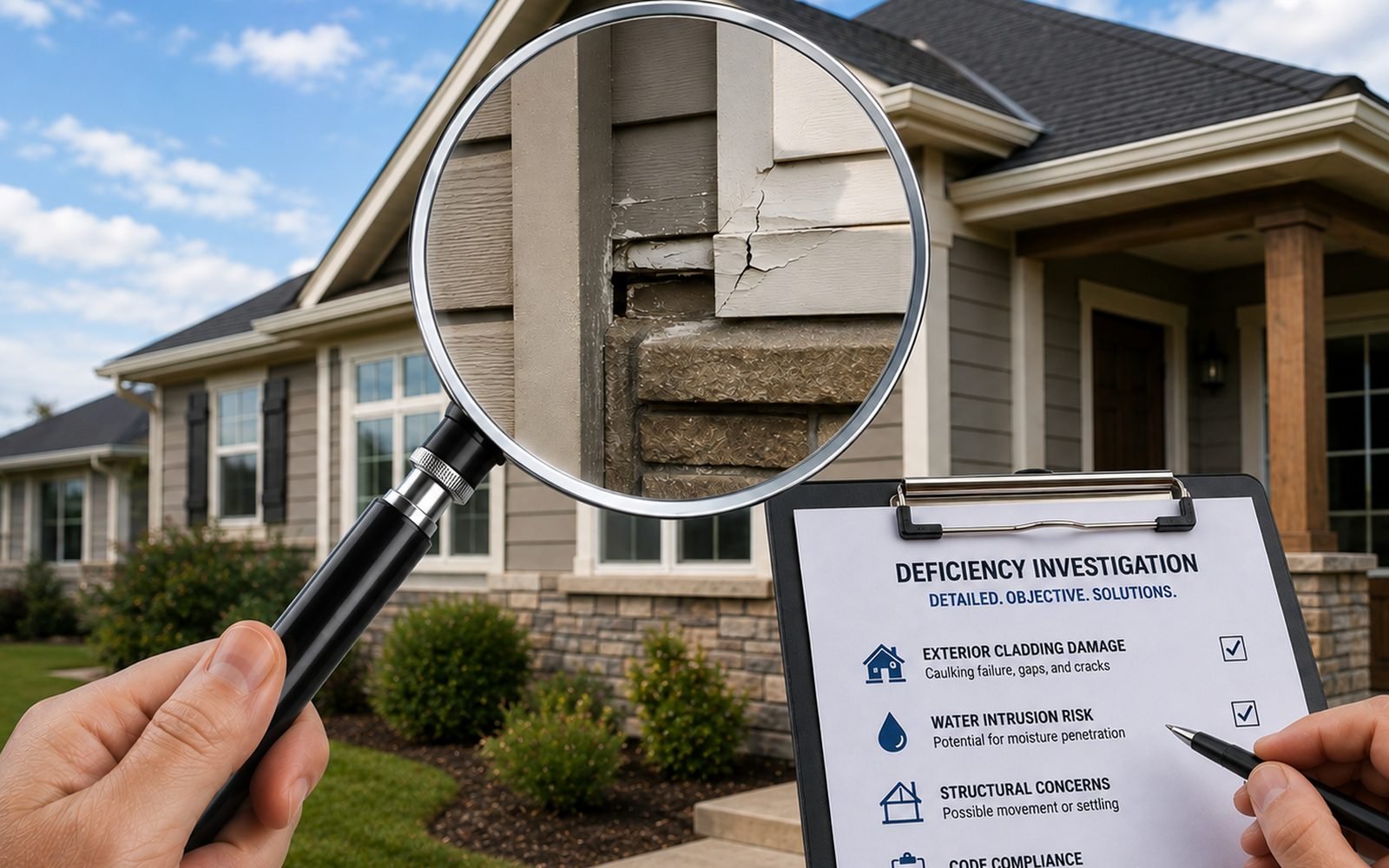
New builds, renovations and warranty disputes assessed against the applicable code, manufacturer instruction and accepted trade practice.
Architectural Building Technologist training is the point here: we can speak to how the assembly was drawn, how it should have been sequenced, what the installer would have seen at the time, and what correction realistically requires.
Discuss a Deficiency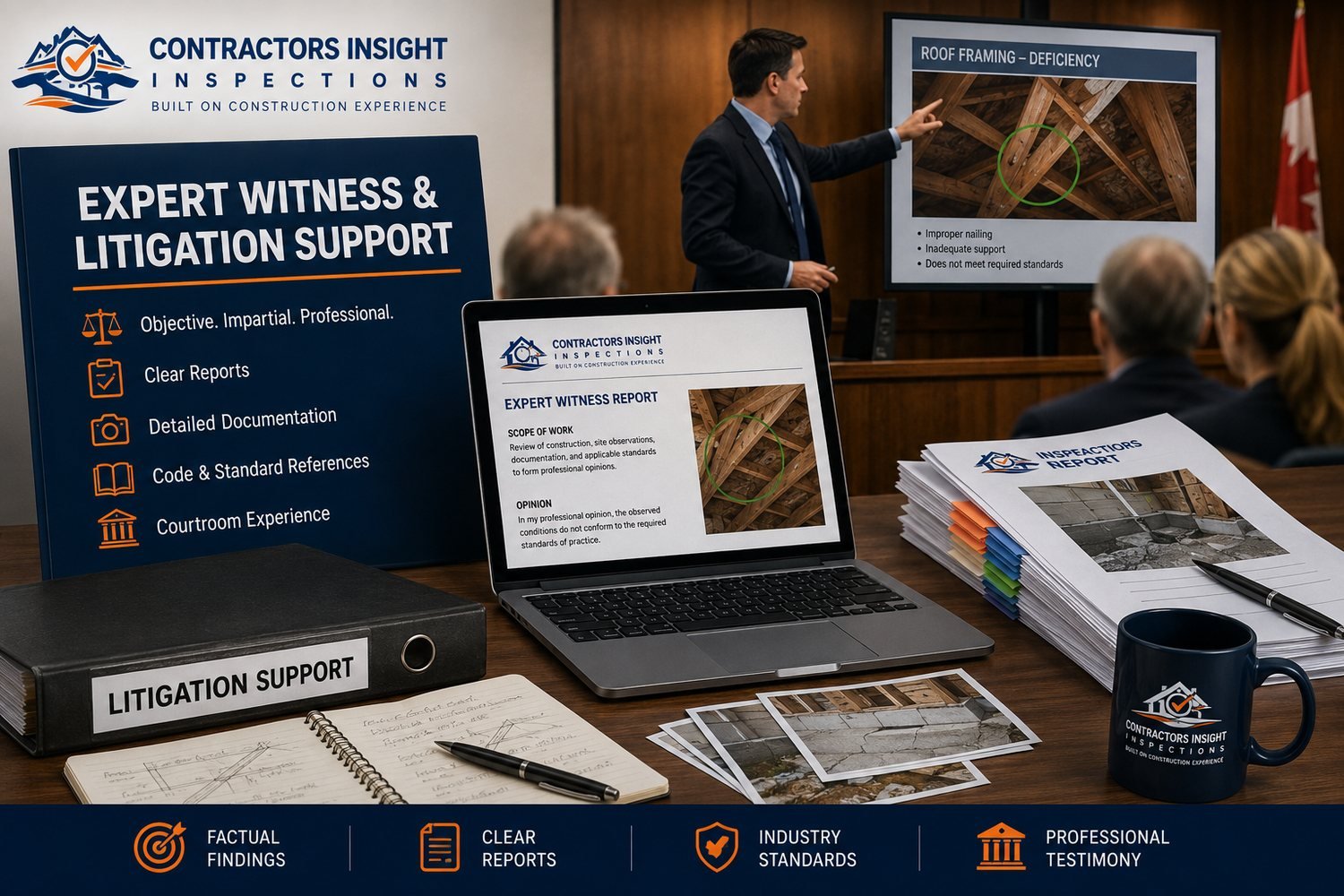
Independent expert reporting, review of opposing reports, and testimony where required — delivered by an InterNACHI® Certified Expert Witness™, a designation covering report preparation for legal proceedings, the duties of an expert, and giving evidence under cross-examination.
We take a position only where the evidence supports it. If the file does not support the conclusion you were hoping for, you will be told that early — which is considerably cheaper than finding out later.
Enquire About a FileFour things, consistently applied.
Dated photographs, located findings, measured where measurement matters.
What was not accessible is declared, not glossed over. Credibility lives here.
Code, manufacturer requirements and the InterNACHI® Standards of Practice cited accurately, and only where they apply.
Architectural Building Technologist and InterNACHI® CPI — a defined basis for the opinion, which is the first thing challenged.
One tells you the building was understood. The other tells you the inspection was held to a published standard. Most inspectors carry one or the other.
What it is: a formal qualification in building design and construction technology — structural assemblies, building envelope and building science, mechanical and electrical systems, construction documentation and building code.
What it means for you: a building gets read as a designed assembly rather than a list of visible symptoms. Stained drywall is a symptom. Knowing whether it came from a flashing detail, a vapour barrier discontinuity, a ventilation failure or a plumbing leak is the part that determines what the repair costs you.
It also means the report speaks the same language as the drawings, the code and the contractor who will eventually do the work.
What it is: the CPI® credential from the International Association of Certified Home Inspectors — the largest inspection association in the world. It requires passing the InterNACHI® Online Inspector Examination, completing the Code of Ethics and Standards of Practice courses, and submitting mock inspection reports for review.
What it means for you: the inspection follows a published Standards of Practice rather than whatever the inspector felt like looking at. You can read that standard yourself and hold the report to it.
It is not a one-time certificate. Maintaining it requires 24 hours of continuing education and re-passing the examination at 80% or better every three years.
Together they cover the two failure modes of a bad inspection: not recognising what you are looking at, and not looking at everything you were supposed to.
Tell us the property, the timeline and what you need to know. We will confirm scope and availability the same day during office hours.